Picture this: You’ve just launched your dream business, and everything’s going smoothly. But what if a sudden mishap throws a wrench in the works? That’s where small business insurance comes in. It’s your safety net, ensuring that unexpected bumps on the road don’t derail your entrepreneurial journey.
Understanding the nuances of small business insurance isn’t just a good idea—it’s absolutely vital. From safeguarding your assets to protecting your workforce, the right insurance coverage can be the difference between thriving and just surviving in today’s competitive market. Let’s dive into the essentials of small business insurance and how three commercial policies can make all the difference.
Understanding Small Business Insurance Needs
Did you know that 40% of small businesses never reopen after a disaster? Yikes! Insurance isn’t just a safety net—it’s your lifeline.
Small businesses face unique challenges, and insurance coverage is crucial for surviving unexpected events. From lawsuits to natural disasters, having the right insurance can mean the difference between thriving and closing up shop.
The Importance of Insurance Coverage
Think your business is immune to common pitfalls? Think again. Even the smallest oversight or accident can lead to financial ruin. Insurance acts as a buffer against these unforeseen events, ensuring your business can weather any storm.
Types of Insurance Policies for Small Businesses
Not all insurance is created equal. Your business needs coverage that’s tailored to your specific risks. Here’s the deal: you’ll typically need a combination of policies like General Liability, Property Insurance, and Workers’ Compensation.
- General Liability: Protects against lawsuits and claims.
- Property Insurance: Covers damage to your business property.
- Workers’ Compensation: Mandatory in many areas, it covers employee injuries.
Risks Small Businesses Face
From cyber threats to natural disasters, risks are everywhere. But here’s the deal: understanding these risks is the first step to mitigation. Insurance can reduce the impact of these incidents, helping you get back on your feet faster.
Pro Tip: “Consider a Business Owner’s Policy (BOP) to bundle essential coverages at a lower cost.”
Evaluating the Right Coverage Amount
How much insurance do you really need? Too little and you’re exposed. Too much and you’re overpaying. Here’s how you can find the sweet spot:
- Assess your risk level and industry-specific threats.
- Calculate the value of your assets and potential liability.
- Consult with a broker to tailor policies to your unique needs.
| Policy Type | Coverage | Cost |
|---|---|---|
| General Liability | Lawsuits, claims | Moderate |
| Property Insurance | Physical assets | Varies |
| Workers’ Compensation | Employee injuries | Mandatory |
Insurance is not just an expense—it’s an investment in your business’s future. By understanding your specific needs, you can secure coverage that not only protects but empowers your business to grow.
Types of Small Business Insurance
Did you know that 40% of small businesses have never been insured? That’s a risky move because one unexpected event can bring down the whole operation. So, let’s dive into the different types of insurance that can safeguard your business.
Choosing the right insurance can be daunting, but it doesn’t have to be. Here is the deal: understanding the types of insurance available can help you make informed decisions that protect your business from potential risks and liabilities.
General Liability Insurance
General Liability Insurance is the backbone of any business insurance strategy. It covers legal fees and damages if your business is sued for bodily injury or property damage. If a customer slips and falls in your store or if you accidentally damage a client’s property, this insurance has you covered.
Pro Tip: Even if you’re a home-based business, you still need general liability insurance.
Professional Liability Insurance
This type of insurance is essential for businesses that provide expert advice or services. Professional Liability Insurance, also known as Errors and Omissions Insurance, protects you against claims of negligence or mistakes in the services you provide. Think of it as your safety net if a client believes you made an error that cost them money.
Workers’ Compensation Insurance
If you have employees, you need Workers’ Compensation Insurance. It’s not just a good idea—it’s legally required in most states. This insurance covers medical expenses and lost wages for employees who get injured on the job, ensuring that you’re not out of pocket for workplace accidents.
Business Interruption Insurance
Imagine a fire or flood shutting down your business for weeks. Business Interruption Insurance compensates for lost income during such disruptions. It’s a lifesaver that keeps your cash flow steady until you’re back on your feet.
Cyber Liability Insurance
With the rise of digital threats, Cyber Liability Insurance has become crucial. It covers the costs associated with data breaches, including legal fees, notification costs, and identity protection for affected customers. If your business handles sensitive customer information, this is a must-have.
Commercial Property Insurance
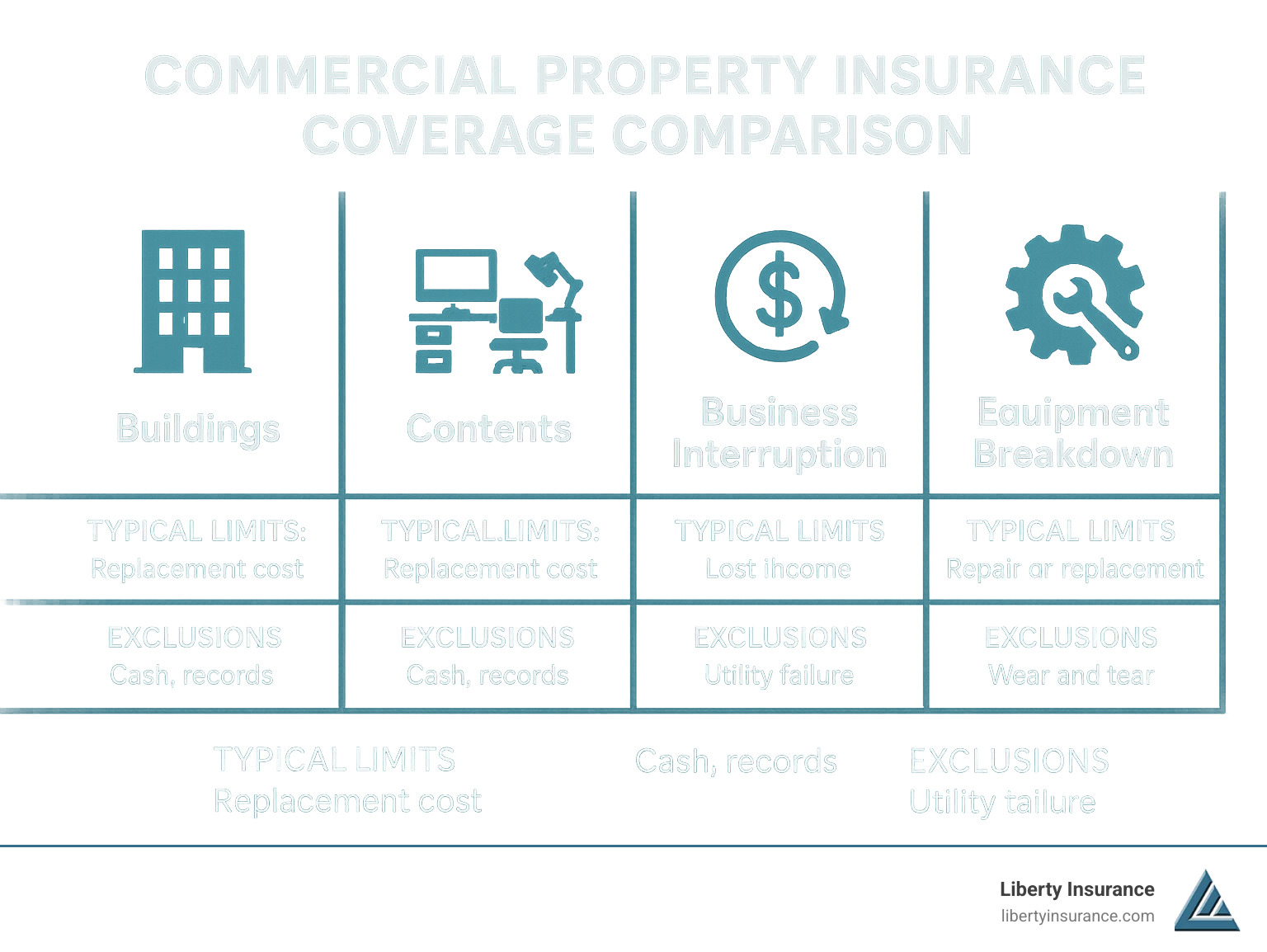
This insurance protects the physical assets of your business—your building, equipment, and inventory. Commercial Property Insurance covers damages from events like fires, theft, and natural disasters. If your office or storefront is hit by a storm, you’ll be glad you have this coverage.
Comparing Insurance Types
Here’s a quick comparison to help you decide which insurances might be best for your small business.
| Type of Insurance | Coverage | Best For |
|---|---|---|
| General Liability | Legal fees, bodily injury, property damage | All businesses |
| Professional Liability | Negligence, errors in services | Consultants, service providers |
| Workers’ Compensation | Employee injuries | Businesses with employees |
| Business Interruption | Lost income due to disruptions | Businesses in disaster-prone areas |
| Cyber Liability | Data breaches, cyberattacks | Online businesses, data handlers |
| Commercial Property | Building and inventory damages | Brick-and-mortar businesses |
Selecting the Right Insurance Provider
Choosing the right insurance provider can make or break your small business. Did you know that 40% of small businesses never reopen after a disaster if they lack proper insurance? Let’s make sure you don’t become part of that statistic.
Here is the deal: finding the right provider involves more than just getting the cheapest quote. It’s about ensuring peace of mind and safeguarding your business’s future. Let’s dive into what you need to know.
Key Factors to Consider When Choosing an Insurance Provider
When it comes to selecting an insurance provider, the devil is in the details. You want to consider the following factors:
- Financial Stability: Check their rating with agencies like A.M. Best.
- Customer Service: How responsive are they when you need them?
- Coverage Options: Do they offer tailored policies that meet your specific needs?
- Claims Process: Is it straightforward or a bureaucratic nightmare?
Pro Tip: Always ask for a sample policy and read the fine print. It’s your blueprint to what is actually covered.
Comparing Different Insurance Providers
Don’t just settle for the first offer. Here’s a quick comparison overview to guide your choice:
| Provider | Financial Rating | Customer Reviews | Claims Process |
|---|---|---|---|
| Provider A | A+ | 4.5/5 | Fast & Easy |
| Provider B | A | 4.0/5 | Moderate |
| Provider C | B+ | 3.5/5 | Complex |
Strategies for Negotiating Better Insurance Terms
Think you can’t negotiate insurance terms? Think again. Here’s how:
Step #1: Gather quotes from multiple providers. Use them as leverage.
Step #2: Identify areas in the policy you feel are unnecessary or overpriced. Discuss these with your agent.
Step #3: Ask about bundling policies for potential discounts.
Pro Tip: Build a relationship with your agent. They can be your ally in getting better terms.
Evaluating the Reputation and Financial Stability of Insurers
Before signing anything, you need to ensure your provider is rock solid. How? By evaluating their reputation and stability. Here’s how:
Step #1: Check online reviews and testimonials. Peer experiences can be telling.
Step #2: Look at the provider’s financial health. Are they growing, or are there red flags?
Step #3: Consult the Better Business Bureau for any unresolved complaints.
Remember, an insurance provider’s reputation is a reflection of how they might treat you in your time of need. Choose wisely.
Legal and Regulatory Aspects of Business Insurance

Did you know that 40% of small businesses fail to insure against legal liabilities? That’s a costly mistake you can’t afford. The legal landscape of business insurance is a maze, but I’m here to guide you through it.
Every region has its own legal requirements for business insurance. From workers’ compensation to liability coverage, knowing these requirements isn’t optional—it’s essential. The right insurance not only safeguards your business but also ensures you comply with local regulations.
Understanding Regional Insurance Requirements
Imagine running a business in California without knowing you need state-mandated workers’ compensation. That could lead to hefty fines or even worse—shutting down your operations. Each state or region has its own set of rules. So, you need to be thoroughly informed about what’s required in your specific area.
Here’s the deal: laws change, and staying updated is crucial. Use state business websites or consult with insurance professionals to keep abreast of regional legal obligations.
The Role of Insurance in Industry Compliance
Insurance isn’t just a safety net; it’s a regulatory requirement. Industries like healthcare and construction are heavily regulated. Having the right insurance can mean the difference between compliance and penalties.
Step #1: Identify the specific regulations that apply to your business sector. Step #2: Ensure your insurance policies align with those regulations. Using industry-specific brokers can save you from compliance nightmares.
Keeping Up with Changes in Insurance Laws
Insurance laws are like shifting sands. They change frequently. You don’t want to be caught off-guard by a sudden policy change.
Pro Tip: Subscribe to industry newsletters and alerts to stay informed about legislative changes.
Regularly review your policy with an expert. This way, you ensure that your business doesn’t fall behind due to outdated compliance.
Organizing Policy Documents for Easy Access
How often do you misplace important documents? It’s more common than you think. But when it comes to insurance, you need those documents at your fingertips.
Organize your insurance policies in both digital and physical formats for easy access. Use cloud storage to back up these documents. Categorize them by policy type and renewal date. This organization ensures you comply with audits and avoid any legal mishaps.
Use these systems to streamline your compliance process. This way, you’ll never scramble for a missing document during an audit.
Cost Analysis and Budgeting for Insurance
Did you know that 40% of small businesses never reopen after a disaster? Insurance isn’t just a safety net—it’s a business survival tool.
Here’s the deal: Understanding and managing your insurance costs can be the difference between thriving or barely surviving. Let’s break down the steps to estimating your insurance costs and crafting a budget that works.
Steps to Estimate Insurance Costs for a Small Business
First things first, you need a baseline. Step #1: Calculate the total value of your business assets. This includes equipment, inventory, physical space, and intellectual property. Step #2: Identify potential operational risks, such as natural disasters or legal liabilities. For each risk, estimate the financial impact on your business if it were to occur.
Step #3: Research industry standards for insurance premiums. Use online calculators or consult with an insurance agent to get a ballpark figure of your annual costs. Step #4: Review past claims and adjust your estimates based on historical data. This provides a clearer picture of your risk profile and potential costs.
Pro Tip: Regularly updating your asset values and risk assessments keeps your estimates accurate and your business properly insured.
Budgeting Strategies to Manage Insurance Expenses Effectively
Budgeting for insurance is not just about cutting costs. It’s about allocating funds wisely. Start by setting aside a fixed percentage of your revenue for insurance expenses. This ensures you’re prepared for premium payments without affecting other operational costs.
Next, consider setting up a separate savings account dedicated to insurance. Regularly contribute a portion of your revenue to this fund, creating a buffer for unforeseen premium increases or additional coverage needs.
But there’s more: Review your insurance budget quarterly. This allows you to adjust for any changes in revenue or new risks. Plus, it keeps your coverage aligned with your business goals.
Methods to Assess the Cost-Benefit Ratio of Different Insurance Policies
Not all insurance policies offer the same value. Start by listing the key benefits each policy provides and compare them to your business needs. For example, if your business heavily relies on equipment, a policy with robust equipment coverage might be more beneficial than one focusing on liability.
Next, calculate the annual cost of each policy and weigh it against the potential financial impact of the risks it covers. This helps you determine if the benefits justify the expense.
Don’t forget to factor in any additional perks or services offered by the insurer, such as risk management consultations or premium discounts for bundling policies. These can significantly enhance the value of a policy.
Options for Reducing Insurance Premiums Without Compromising Coverage
Think you need to cut coverage to save on premiums? Think again. Start by bundling policies with one provider to take advantage of discounts. Often, insurers offer better rates for clients who consolidate their coverage.
Next, review your deductibles. Increasing your deductible can lower your premium, but ensure it’s an amount you can comfortably pay out-of-pocket.
Another option is to implement risk management strategies that reduce the likelihood of claims. Insurers often reward businesses that proactively minimize risks, translating to lower premiums.
Finally, regularly shop around for quotes. The insurance market is competitive, and you might find a better rate with another provider. Just make sure the new policy offers equivalent or better coverage.
Claims Process for Small Business Insurance
Did you know that 40% of small businesses never reopen after a disaster? Filing an insurance claim correctly can be the lifeline your business needs. Here’s how to do it right.
Filing an insurance claim isn’t as complicated as you might think. But you must follow the steps carefully to ensure everything goes smoothly. From assessing the damage to communicating with your insurer, every step matters.
Steps to File an Insurance Claim
Okay, let’s break it down. Step #1: Assess the damage immediately and take action to prevent further loss. Step #2: Notify your insurance provider as soon as possible. Time is crucial here. Step #3: Document everything. Take photos, videos, and write detailed notes. Step #4: Fill out the claim forms provided by your insurer and submit them along with your documentation. Finally, Step #5: Stay in touch with your insurer for updates and follow up regularly until your claim is resolved.
Tips for a Smooth Claims Process
Want a hassle-free experience? Make sure your policy is up to date and covers all potential risks your business faces. Keep a detailed inventory of your assets and their values. And if you’re not sure about something, ask your insurer.
Pro Tip: Always have a dedicated file (physical or digital) for each claim with all your documents and correspondences.
Sample Claims Checklist
Use this checklist to ensure you’ve covered all bases when filing a claim:
| Task | Status |
|---|---|
| Assess and document the damage | Complete |
| Contact insurance provider | Pending |
| Fill and submit claim forms | Pending |
| Follow up with insurer | Ongoing |
Best Practices for Documenting and Communicating
Documentation is everything in the claims process. Keep records of all communications with your insurer, including emails and call logs. When documenting an incident, include dates, times, and people involved. This helps build a strong case for your claim. When communicating, be clear, concise, and direct. Your insurer needs to understand the situation quickly to process your claim efficiently.
Closure
In the grand scheme of running a business, insurance might seem like just another task on your endless to-do list. But remember, it’s an investment in peace of mind and business continuity. By carefully selecting the right coverage and provider, you can focus on what truly matters: growing your business. Here’s to making informed insurance decisions that protect your dreams and pave the way for success.
Frequently Asked Questions
What are the three most essential types of small business insurance?
General liability insurance, commercial property insurance, and professional liability insurance are fundamental for most small businesses.
How does general liability insurance protect my business?
It covers legal costs and damages if your business is found liable for injuries or property damage to third parties.
Why is commercial property insurance important?
This insurance safeguards your business assets, such as equipment and inventory, against risks like fire or theft.
What scenarios necessitate professional liability insurance?
It’s crucial for businesses providing expert advice or services, protecting against claims of negligence or errors.
How can I reduce my insurance premiums while maintaining coverage?
Consider bundling policies, raising deductibles, and implementing risk management practices to lower costs.
What should I consider when choosing an insurance provider?
Evaluate their reputation, financial stability, and customer service quality. Also, compare policy options and costs.
